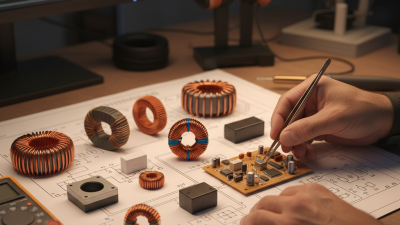
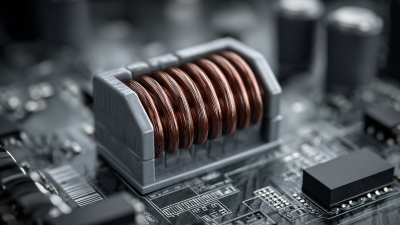
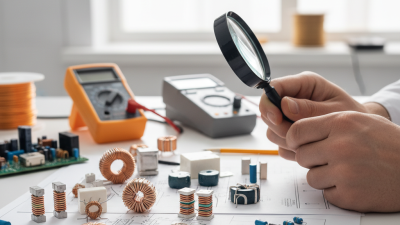
High Frequency Inductors are pretty essential in today’s electronics world. You know, these tiny components are key when it comes to making sure signals are processed efficiently. As tech keeps moving forward, picking the right High Frequency Inductor becomes more and more important. There are tons of manufacturers out there offering different options, but not all of them match the same quality standards.
In this article, I wanna take you through the top 10 High Frequency Inductors that are popular among buyers worldwide. We’ve looked into each one carefully, considering factors like how they perform, how reliable they are, and what users are saying. Brands like Coilcraft and Vishay are known for their innovative designs that really boost efficiency. Their products tend to get pretty good reviews. But, hey, it’s important to keep in mind that what works for one person might not be perfect for someone else—so you need to think about your specific needs.
Now, I should mention that while this guide aims to give you a good overview, there could still be some hiccups, especially when it comes to compatibility. Not every High Frequency Inductor is gonna be a perfect fit for every project. Figuring out what you actually need is the best way to narrow down your options. In a field that’s constantly changing, staying in the loop helps you make smarter choices. So, I hope this quick rundown helps you navigate the world of High Frequency Inductors a little easier and find the right one for you.
Overview of High Frequency Inductors in Global Markets
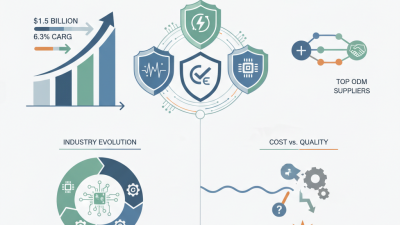
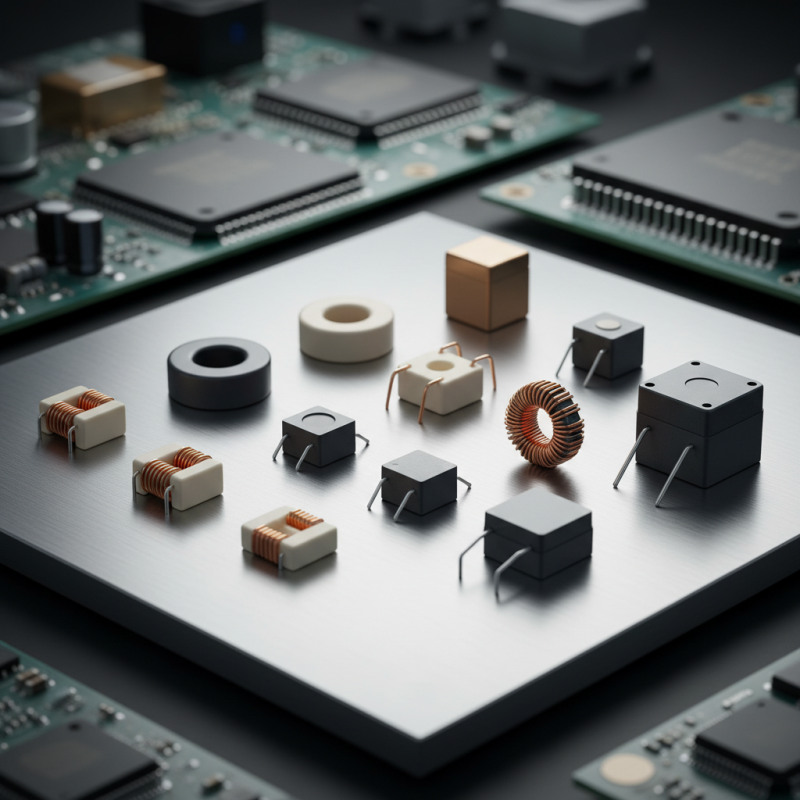
High Frequency Inductors play a crucial role in the electronics market, especially in applications like telecommunications, automotive, and renewable energy. The demand for these components has increased significantly in recent years, driven by the growth of high-frequency electronic devices. According to a report from Research and Markets, the global inductors market is expected to reach approximately $6 billion by 2025, growing at a compound annual growth rate (CAGR) of 5.6%. This growth highlights the importance of High Frequency Inductors in meeting technological advancements and consumer needs.
Global manufacturers focus on enhancing the performance and reliability of inductors. Many are investing in new materials and manufacturing techniques. Fine-tuning the inductance value, reducing core losses, and improving thermal management are key areas of innovation. However, challenges remain. The risk of supply chain disruptions and fluctuating raw material costs can impact production timelines. The balance between quality and cost continues to be a topic of discussion among industry experts.
As the market evolves, the range of applications for High Frequency Inductors expands. With more devices requiring efficient power management, the need for reliable inductors increases. Yet, some manufacturers struggle to keep up with technological advancements. Market research indicates that continuous improvement and adaptation to new standards are essential. The competitive landscape demands a focus on not only performance but also sustainability in manufacturing practices.
Key Features and Specifications of High Frequency Inductors
High Frequency Inductors are essential for maintaining signal integrity in various electronic applications. Their performance is often driven by key features such as inductance value, DC resistance (DCR), and self-resonant frequency (SRF). A detailed report indicates that inductors with higher SRF reduce the risk of signal distortion significantly. Typically,High Frequency Chokes exhibit a SRF exceeding a few hundred MHz, making them suitable for RF and high-speed digital circuits.
In terms of specifications, the inductance range plays a vital role in determining the efficacy of performance. Inductors ranging from 0.1μH to 10μH are commonly favored in industrial settings. Their ability to handle higher currents without excessive temperature rise is crucial. Reports show that DCR should ideally be lower than 10 ohms, allowing better efficiency and thermal performance. However, some manufacturers fall short, leading to inefficiencies.
It's important to note that not all High Frequency Inductors adhere to the same quality standards. Variability in production can lead to inconsistencies in specifications. Buyers should evaluate the testing protocols of manufacturers to ensure reliability in high frequency choke applications. Research highlights that a rigorous compliance system can enhance the trustworthiness of the specifications.
Top 10 High Frequency Inductors for Global Buyers
| Inductor Type | Inductance (µH) | DC Resistance (Ω) | Current Rating (A) | Frequency (MHz) | Temperature Range (°C) |
| Smd Inductor | 10 | 0.15 | 3.5 | 30 | -40 to 125 |
| Air Core Inductor
| 15 | 0.20 | 3.0 | 25 | -40 to 100 |
| Ferrite Core Inductor | 20 | 0.25 | 4.0 | 50 | -40 to 125 |
| Toroidal Inductor | 25 | 0.35 | 5.0 | 75 | -40 to 150 |
| Common Mode Choke | 30 | 0.40 | 3.5 | 40 | -20 to 85 |
| Power Inductor | 40 | 0.50 | 6.0 | 100 | -10 to 125 |
| Multi-Layer Inductor | 50 | 0.60 | 4.5 | 150 | -40 to 130 |
| Variable Inductor | 5 | 0.10 | 2.0 | 20 | -30 to 85 |
| Choke Inductor | 22 | 0.25 | 4.0 | 60 | -20 to 120 |
| Line Filter Inductor | 35 | 0.55 | 5.0 | 80 | -40 to 100 |
Top Brands and Manufacturers of High Frequency Inductors
The demand for high frequency inductors has increased significantly in various industries. This trend is rooted in the growing need for efficient power management solutions. According to industry reports, the high frequency inductor market is projected to witness a compound annual growth rate (CAGR) of around 8.5% over the next five years. This growth highlights the emphasis on advanced technology and innovation.
Leading manufacturers in this sector focus on producing reliable and efficient high frequency inductors. Their commitment to quality ensures better performance and longevity. Factors such as increased use of wired communication equipment and power electronics applications drive this trend. Many manufacturers are investing in research to develop inductors with improved thermal reliability and reduced electromagnetic interference, which are critical in High Frequency Transformer applications.
Despite advancements, the industry faces challenges. Some manufacturers struggle with maintaining quality while scaling production. Additionally, varying specifications in different regions complicate standardization. The need for rigorous testing and certification processes adds additional layers of complexity. Addressing these issues is vital for sustaining growth and ensuring product reliability.
Applications of High Frequency Inductors in Electronics
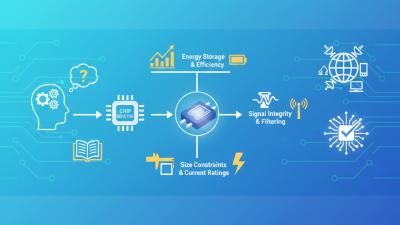
High frequency inductors play a crucial role in modern electronics. These components are essential for managing signal integrity in various applications. They function effectively in filtering and energy storage. Their ability to maintain high performance at elevated frequencies makes them indispensable in communication devices.
One critical application is in RF circuits. High Q Inductors enable precise tuning and help reduce signal loss. This is vital for mobile communication and broadcasting systems. Their design often incorporates materials that enhance thermal stability, enhancing reliability. However, not all inductors perform equally. Users must evaluate specifications carefully to avoid poor choices.
Another common use is in power converters. High frequency inductors improve efficiency by minimizing energy losses during operation. Engineers often face challenges in selecting suitable inductors for specific tasks. The trade-offs between size, inductance, and current rating need careful consideration. Moreover, some inductors may exhibit unwanted resonant frequencies. Achieving the optimal balance can be a painstaking process, demanding both expertise and experience.
Comparative Analysis of High Frequency Inductors Performance
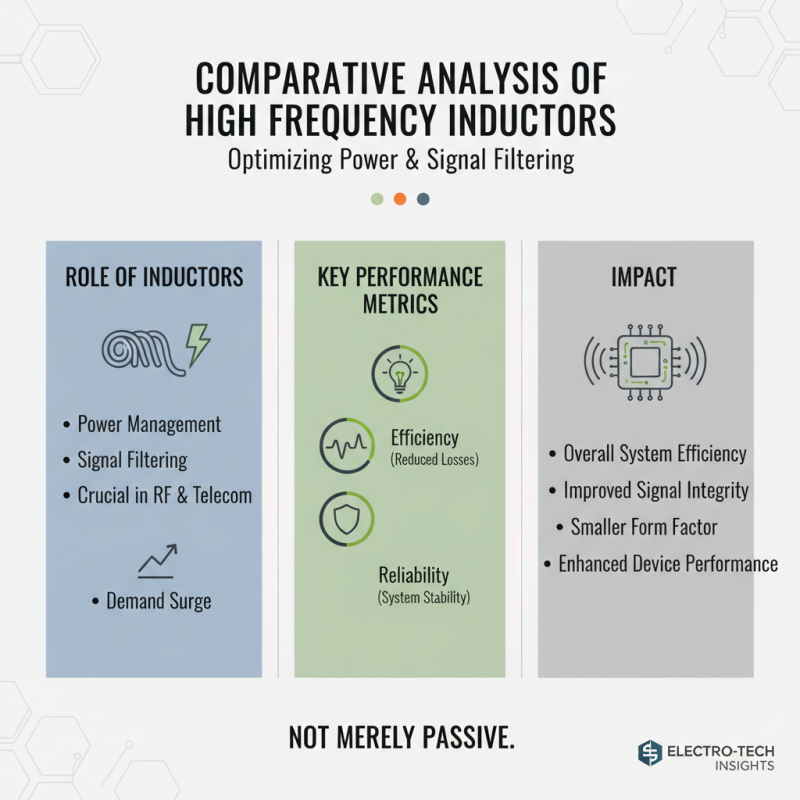
In the realm of electronics, high frequency inductors play a crucial role in power management and signal filtering. Recent industry reports highlight that the demand for efficient inductors has surged, particularly in applications like RF devices and telecommunications. These components are not merely passive; their performance directly impacts overall system efficiency.
A comparative analysis reveals variations in core materials and winding techniques among different inductors. Ferrite cores typically yield higher inductance values, while air-core inductors excel in high-frequency applications due to lower losses. According to a 2023 market report, optimal performance often hinges on achieving a balance between size and inductance. Factors such as temperature stability and saturation current ratings are essential to consider.
Moreover, the selection of an inductor must account for environmental impacts. The increasing focus on sustainability has prompted manufacturers to explore eco-friendly materials. These innovations not only enhance performance but also address regulatory compliance issues. High frequency inductors must evolve, reflecting a broader industry responsibility towards both efficiency and environmental stewardship. Embracing these considerations could lead to significant improvements in device longevity and reliability.
Factors Influencing the Selection of High Frequency Inductors
When selecting high-frequency inductors, several crucial factors come into play. The inductance value is essential. It determines how well the inductor can store energy and filter signals. Buyers often need to consider the frequency range the inductor will operate in. In many applications, the inductance must be precise to avoid signal loss or distortion.
Another critical aspect is the core material. Different materials affect the inductor's performance under various conditions. Ferrite cores, for example, are known for their high permeability. They are effective for higher frequencies. However, they're less ideal for applications requiring higher currents. Similarly, the size and physical layout of the inductor can impact its performance.
Thermal management is another important element. High-frequency inductors often operate under significant heat. Proper heat dissipation methods help maintain performance and longevity. There may be instances where balancing size and thermal efficiency becomes a challenge. Overall, understanding these factors empowers buyers to make informed decisions. The selection process can be intricate but is key to achieving optimal performance.
Future Trends and Innovations in High Frequency Inductor Technology
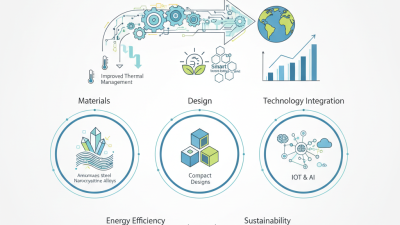
High Frequency Inductors are evolving rapidly. Innovations are driven by the demand for smaller, more efficient components. These advancements lead to enhanced performance in communication devices and power supplies. Smaller sizes enhance design flexibility, allowing engineers to explore new options. Improved materials also contribute to better thermal management and reliability.
Current trends focus on integrating advanced materials. Ferrite cores and metal composite materials promise higher efficiency. These materials can reduce losses, which is crucial for High Power Inductor applications. Simultaneously, the trend of miniaturization continues to challenge designers. They must balance performance and size. Higher frequencies often lead to unexpected issues, such as increased electromagnetic interference. Thus, addressing this is a priority for developers.
Innovation does not stop at materials and design. Research into custom winding techniques is gaining traction. Tailoring inductors for specific applications can enhance their effectiveness. However, this customization adds complexity, and not all solutions will be successful. Continuous feedback and testing remain essential. Exploring new designs might yield both failures and breakthroughs. The journey toward the perfect High Frequency Inductor is long and full of learning opportunities.
FAQS
: The growing need for efficient power management solutions drives demand in various industries.
The market is projected to witness an 8.5% compound annual growth rate over the next five years.
Manufacturers struggle to maintain quality while scaling production. Varying regional specifications complicate standardization.
Rigorous testing ensures product reliability and helps address challenges in performance across different applications.
Ferrite cores and metal composite materials promise higher efficiency and better thermal management.
Miniaturization challenges designers, as they must balance performance with increased electromagnetic interference risks.
Custom winding techniques can enhance effectiveness, but they also add complexity and may not always succeed.
Continuous feedback and testing are essential for refining designs and achieving breakthroughs in performance.
Not all innovations work as intended; exploring new designs can lead to both failures and valuable insights.
Trends include integrating advanced materials and exploring design flexibility for better performance in communication devices.
Conclusion
High frequency inductors play a crucial role in modern electronics, catering to a wide array of applications across global markets. These components are characterized by their ability to operate efficiently at elevated frequencies, making them essential in various devices, from RF transmitters to power management systems. Key features of high frequency inductors include low DC resistance, high saturation current, and compact design, which enhance performance and reliability in electronic circuits.
The selection of high frequency inductors is influenced by various factors, such as application requirements, efficiency, and thermal performance. As technology advances, there is a growing trend towards innovation in inductor design, highlighting the importance of materials and manufacturing processes. Future developments are likely to focus on increased efficiency, miniaturization, and enhanced thermal management to meet the evolving demands of the electronics industry.

 +86-15916242887
 CONTACT US